
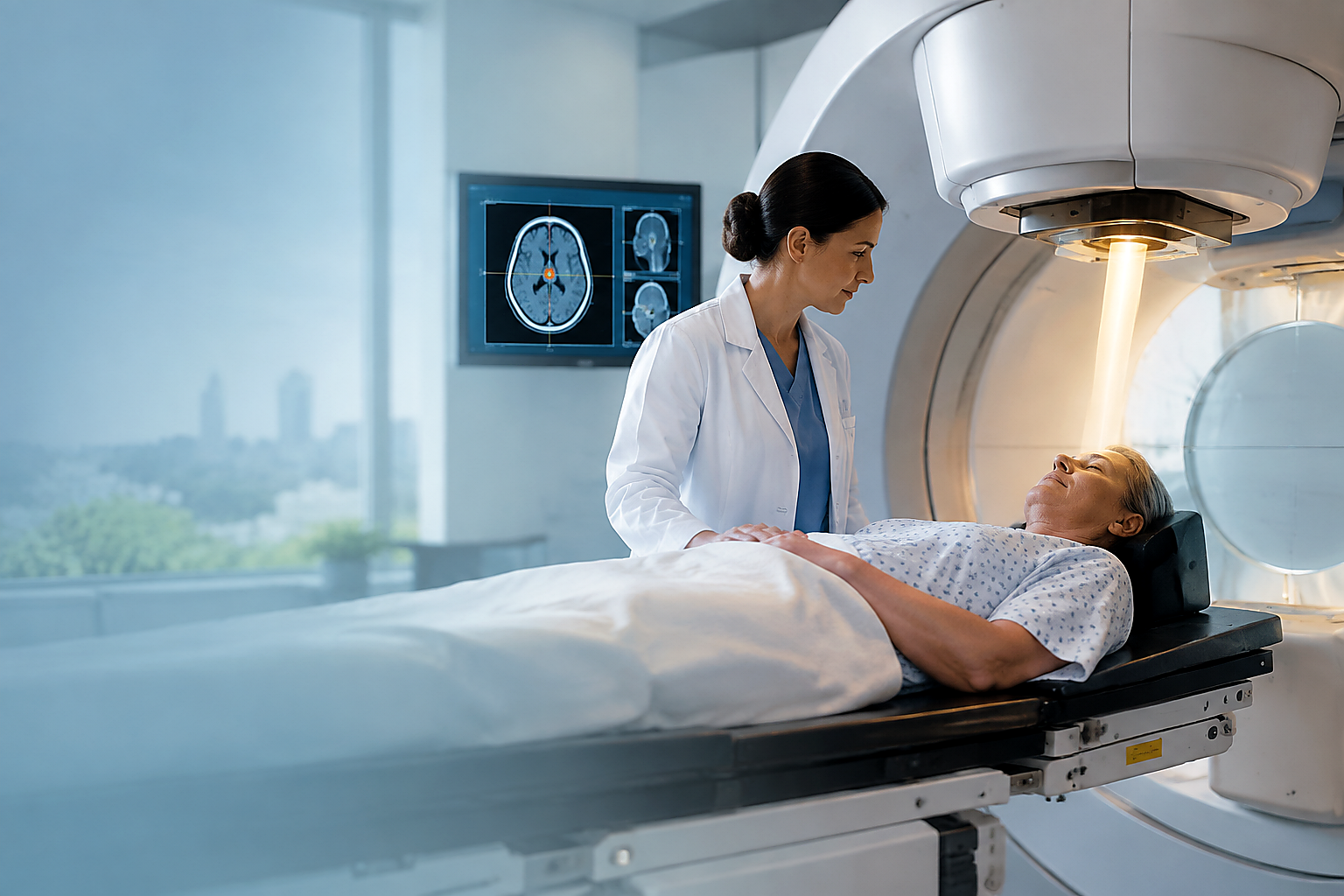
In a study comparing nearly 1,500 adults who received chemotherapy and radiation therapy, the proportion experiencing severe side effects within 90 days after treatment was 11.5% among patients who received proton therapy and 27.6% among those who received conventional X-ray radiation therapy. One-year overall survival was 83% and 81%, respectively, with no statistically significant difference. [1]
For patients, the important question is not whether proton therapy is “better” in the abstract. It is whether, for a particular tumor, organ, age group, treatment history, and risk profile, a proton therapy plan can provide a meaningful dosimetric or clinical advantage.
How Does Proton Therapy Differ from Conventional Radiation Therapy?
Both proton therapy and conventional external-beam radiation therapy treat cancer by delivering ionizing radiation to a tumor. Radiation damages cellular DNA, making it difficult for cancer cells to reproduce and survive. [3] The difference lies in the type of particle used and how energy is deposited as the beam passes through the body. [4]
Conventional radiation therapy generally uses photons, also known as X-rays. After entering the body, a photon beam passes through the tumor and continues traveling forward. As a result, tissues in front of and behind the tumor may be exposed to radiation. Modern photon technologies—including intensity-modulated radiation therapy (IMRT) and image-guided radiation therapy—can shape and direct the beam more precisely, but they cannot eliminate exit dose. [2][1]
Proton therapy uses positively charged protons. As protons slow down, they deposit most of their energy at a predetermined depth, a location known as the Bragg peak. Beyond that point, the dose falls rapidly, so there is little or no exit dose behind the target in the conventional sense. [1][5]
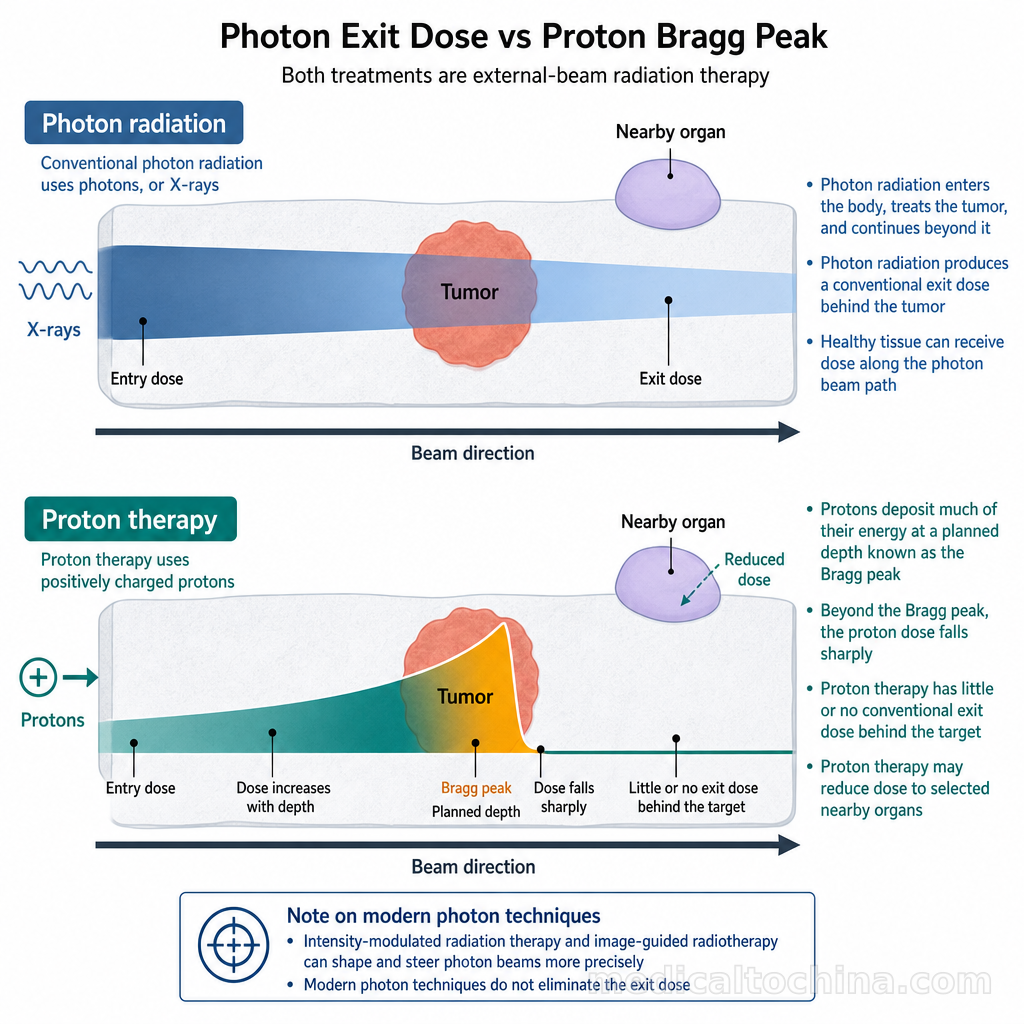
A simplified comparison:
| Feature | Conventional photon radiation therapy | Proton therapy |
|---|---|---|
| Particles used | Photons, or X-rays | Protons |
| Energy distribution | Radiation enters the body, irradiates the tumor, and continues traveling forward | Energy rises near a predetermined stopping point and then falls rapidly |
| Dose behind the tumor | Exit dose is present | Exit dose is significantly reduced |
| Treatment category | External-beam radiation therapy | External-beam radiation therapy |
| Main potential advantage | Broad availability and high conformality; suitable for many cancers | May reduce the dose received by specific nearby organs |
| Main limitations | Healthy tissues along the beam path and behind the tumor may be exposed to radiation | Higher cost, fewer treatment centers, and uncertain clinical benefit for many tumor sites |
Therefore, the phrase “proton therapy versus radiation therapy” can be misleading. Proton therapy is radiation therapy. It is not an alternative outside the broader category of radiation treatment, but a form of external-beam radiation therapy that uses protons rather than photons. [4]
This physical difference is real, but physical characteristics alone cannot determine a patient’s treatment outcome. A treatment plan must deliver a sufficient dose to the tumor while protecting organs at risk. The meaningful comparison is the patient’s individual dose-volume distribution: how much radiation the heart, lungs, spinal cord, brain, visual organs, bowel, kidneys, salivary glands, or other sensitive tissues would receive under each plan. [2]
A proton plan may reduce the dose to one organ without offering a clear advantage in other respects. In some situations, modern photon radiation therapy can achieve an equally acceptable dose distribution. [2]
This matters because a more favorable dose distribution does not automatically prove better tumor control, longer survival, or fewer late complications. Clinical outcomes depend on tumor biology, stage, treatment dose, chemotherapy, surgery, imaging accuracy, the patient’s anatomy, length of follow-up, and the experience of the treatment team. [2]
How Accessible Is Proton Therapy?
Proton therapy remains less accessible than conventional photon treatment. In October 2022, 118 proton therapy centers were operating worldwide, including 42 in the United States. As of December 2021, an estimated 279,455 patients worldwide had received proton therapy. [2]
Photon radiation therapy is available at more hospitals because linear accelerators are simpler and less expensive to build and operate than proton therapy facilities. Differences in access can affect travel, insurance authorization, appointment times, accommodation arrangements, and whether treatment can be received close to home. [2][5]
For international patients, the treatment equipment is only one part of the decision. The treatment center must be able to review pathology and imaging, develop comparative plans, manage side effects, coordinate any necessary chemotherapy or surgery, and communicate with the patient’s doctors in their home country about follow-up. Having a technically suitable proton beam does not necessarily mean that a center provides comprehensive cancer care.
Who Might Benefit—and When Conventional Radiation May Be Equally Appropriate
Proton therapy may be more worth considering when a tumor is close to organs that are particularly sensitive to radiation, when the patient is expected to live for many years, or when reducing cumulative radiation exposure could affect long-term health. This clinical review notes that pediatric tumors and tumors in anatomically complex locations may be situations in which proton therapy has particular potential. [2]
Children are one important group because developing organs and tissues may be more vulnerable to radiation, and children may have decades in which late effects can emerge. Potential concerns include cognitive development, endocrine function, growth, hearing, vision, fertility, and secondary cancers. [2]
However, the evidence in pediatric patients is not consistent. In one study comparing children with medulloblastoma, the 5-year overall survival rate was 89.6% among children treated with double-scattered proton therapy and 93.4% in the photon therapy group. Other pediatric studies have reported similar or inconsistent survival outcomes. [2]
Some comparative studies have found differences in neurocognitive outcomes between the two treatments. In one pediatric medulloblastoma study, the full-scale IQ was 99.6 in the proton therapy group and 86.2 in the photon therapy group; performance IQ was 103.1 and 88.9, respectively. [2]
For tumors near the brain, spinal cord, eyes, salivary glands, heart, lungs, bowel, or other critical structures, this potential advantage may also be meaningful, because even a modest dose reduction could affect outcomes. The final decision depends on whether the dose reduction is sufficient to change the patient’s expected risks, symptoms, function, or future treatment options. [2][5]
Conventional photon treatment may be equally appropriate when:
- The tumor is not close to particularly sensitive organs.
- The photon plan can already adequately protect normal tissues.
- The available proton plan would not substantially improve the dose distribution.
- Evidence for proton therapy at that tumor site has not shown better tumor control or a clinically meaningful reduction in toxicity.
- Long-distance travel would interrupt chemotherapy, surgery, rehabilitation, family support, or follow-up.
- The patient’s insurance or public funding does not cover proton therapy and the additional cost is high. [2][5]
A review of comparative evidence by the National Cancer Institute (NCI) found that, among adults with locally advanced cancers who received concurrent chemotherapy and radiation therapy, the cancer outcomes of the two treatments were similar. The study included multiple cancer types and found fewer severe side effects with proton therapy, but no clear survival advantage. [5]
Australia’s overseas medical treatment program illustrates how a government payer may assess eligibility. For many patients applying for proton therapy overseas, the application must include a comparison of proton and photon treatment plans. Under the program, some specific groups may not need the same comparison, including patients aged 25 or younger who are receiving craniospinal irradiation; children aged 5 or younger with brain tumors; and some young patients with skull-base chordomas, chondrosarcomas, or radiosensitivity syndromes. [6]
This approach treats the diagnosis as the starting point for assessment, not the endpoint. Patients do not automatically qualify simply because their tumor can be treated with protons. The treatment team must explain why, for that patient, a proton plan is superior to an equally effective photon alternative. [6]
Practical Decision Criteria
Patients considering proton therapy should request a written comparison that includes:
- The planned dose to the tumor and any areas that may contain microscopic disease.
- The dose received by nearby organs at risk.
- The expected number of treatments.
- The photon treatment technology used for comparison, such as IMRT, volumetric modulated arc therapy (VMAT), or other modern techniques.
- The treatment team’s explanation of the dosimetric differences, including whether those differences are expected to reduce a specific short-term or long-term complication.
- Evidence supporting proton therapy for the patient’s cancer type and stage.
- The possible consequences if treatment must be interrupted or if the patient develops complications while overseas.
A practical question is: “Which organ does the proton plan protect? By how much? How is that expected to change my treatment?” The answer should be much more specific than “protons are more precise.”
Side Effects, Quality of Life, and Long-Term Outcomes
Proton therapy can reduce radiation exposure to healthy tissues, but it cannot eliminate side effects. The tumor will still receive radiation, and nearby tissues may also receive some dose. Side effects may also be related to the cancer’s location, total dose, treatment field, chemotherapy, hormone therapy, surgery, and the patient’s underlying health. [2][7]
The most representative figures currently available from comparative adult evidence come from an observational study of nearly 1,500 adults who received chemotherapy and radiation therapy. Within 90 days, the rate of severe side effects requiring hospitalization was 45 of 391 patients treated with proton therapy, or 11.5%; and 301 of 1,092 patients treated with photon therapy, or 27.6%. [1][5]
The same study reported one-year overall survival of 83% in the proton therapy group and 81% in the conventional X-ray radiation group. The difference was not statistically significant. [1] At three years, cancer-free survival was 46% in the proton therapy group and 49% in the conventional radiation group; overall survival was 56% and 58%, respectively. [5]
These findings support a clinically meaningful hypothesis: reducing radiation exposure to normal tissues may help some patients tolerate combined chemotherapy and radiation therapy more safely. This may be especially important for patients with limited physiologic reserve or tumors near structures where treatment complications could be severe. [1][5]
Proton Therapy Can Still Cause Side Effects
For head and neck cancers, proton therapy may reduce the dose received by structures such as the eyes, mouth, brain, salivary glands, and thyroid. Even so, the treated area may still develop skin irritation, mouth sores, sore throat, painful swallowing, fatigue, dry mouth, nausea, changes in taste, and difficulty maintaining adequate nutritional intake. [7]
For other treatment sites, possible effects include:
- Difficulty swallowing or inflammation of the esophagus.
- Nausea, vomiting, diarrhea, or reduced appetite.
- Fatigue during or after treatment.
- Redness, irritation, or pain of the skin.
- Urinary frequency, urgency, burning with urination, or urinary obstruction.
- Bowel irritation or rectal bleeding.
- Effects on sexual function or reproduction.
- Hormonal or endocrine changes.
- Cognitive effects in children receiving brain or craniospinal radiation therapy.
- Late damage to irradiated organs, including uncommon but serious complications. [2][1][7]
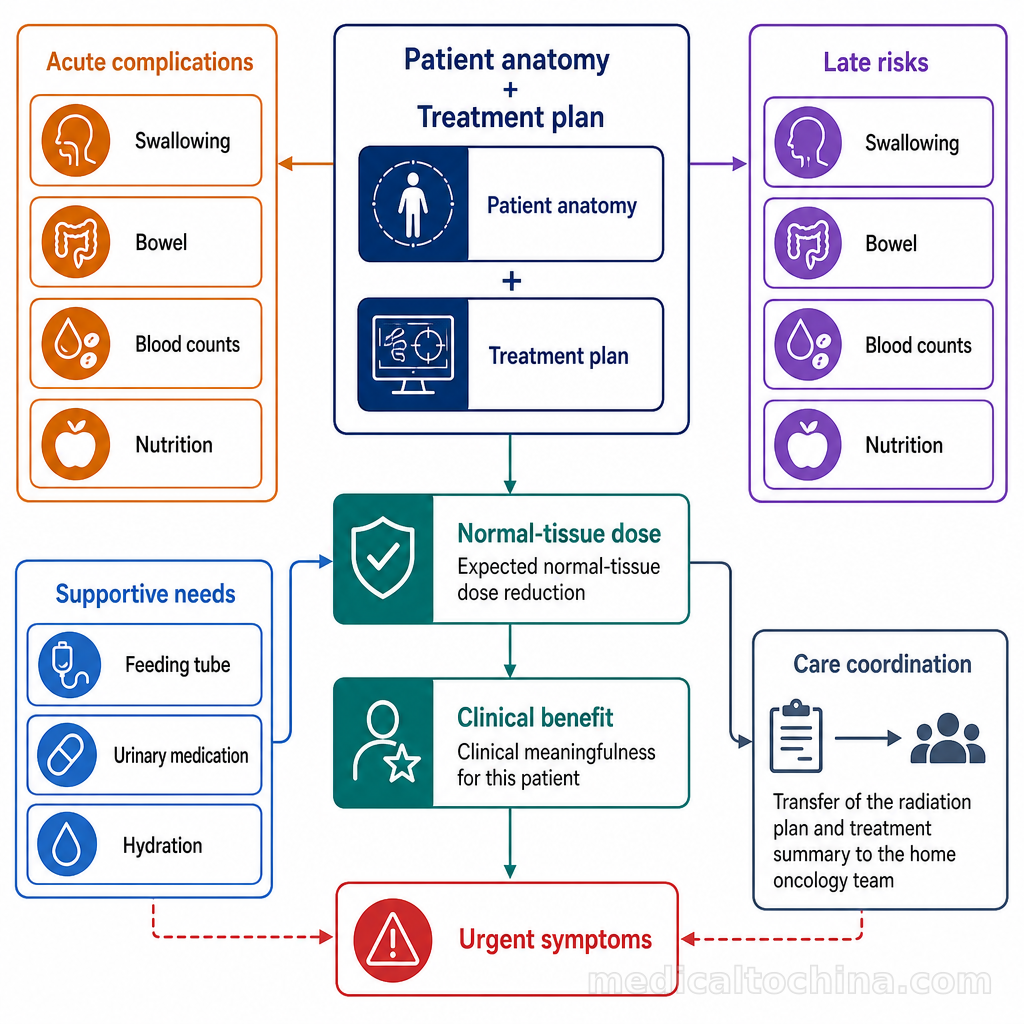
Specific risks depend on the body site and dose distribution. Patients should ask which effects are expected during treatment and which may appear weeks or months later; which symptoms require urgent evaluation; and what medical support is available locally if treatment is provided overseas.
Endocrine and Cognitive Effects in Children
Long-term outcomes in children require separate discussion because late effects may not become apparent until years after treatment. In one comparative medulloblastoma study, hypothyroidism occurred in 23% of children treated with proton therapy and 69% of those treated with photon therapy. The proportions requiring endocrine replacement therapy were 55% and 78%, respectively. [2]
Other studies have not produced exactly the same results. Differences in age, tumor risk, treatment field, radiation technique, chemotherapy, follow-up duration, and survivorship care may all affect study findings. [2] Pediatric radiation oncologists should therefore discuss both the immediate goals of treatment and the health management the child may need over the following decades.
Questions to Ask Before Traveling
Before booking treatment, patients and families should ask the treatment team to explain:
- Which side effects are most likely for this tumor site?
- What is the estimated risk of requiring hospitalization?
- Will chemotherapy increase the risk of swallowing, bowel, blood-count, or nutritional complications?
- Which symptoms should prompt immediate contact with a doctor?
- Might the patient need a feeding tube, urinary medications, intravenous fluids, or nutritional support?
- What long-term endocrine, cognitive, fertility, bowel, urinary, or cardiovascular risks are possible?
- Who will manage complications while the patient is overseas?
- How will the patient’s home-country oncology team receive the radiation plan and treatment summary?
The goal is not to find a treatment with no side effects at all. It is to determine whether, for the patient’s specific anatomy and treatment plan, reducing the dose to normal tissues has clinical significance.
Patient Case: Brian’s 28 Proton Treatments for Prostate Cancer
Brian Jarvis described his experience with prostate cancer treatment in a patient discussion forum at Mayo Clinic. His account illustrates treatment preparation, daily treatment, one acute side effect, and follow-up. [8]
Jarvis was 65 when he was diagnosed with localized prostate cancer. His Gleason score was 7, specifically 4+3, and his PSA was 7.976. Before receiving proton therapy, he had a SpaceOAR Vue placed and received six months of Eligard treatment through two injections given three months apart. [8]
He received 28 proton radiation treatments in April and May 2021. For each treatment, he needed to arrive at the treatment center with a full bladder and an empty bowel. [8]
On the third day of treatment, he developed a mild urinary problem. His radiation oncologist believed it was caused by an inflammatory response near the urethra, something that can occur in some men during radiation therapy. The doctor advised him to double his tamsulosin dose for the remainder of treatment; Jarvis said the problem resolved after the dosage was adjusted. [8]
He experienced no other significant side effects during treatment. As he described it, each session involved preparation, receiving the radiation, and then leaving the treatment center. He wrote that the entire process was like “walking through a door, receiving treatment (28 times), and then walking out the door.” [8]
Three years later, Jarvis said he was having blood tests every four months. He reported that his PSA had fluctuated between 0.35 and 0.55 ng/mL; the most recent test at the time of his post was 0.47 ng/mL. He reported no persistent side effects and said he did not regret his decision. [8]
For prostate cancer, patients should consider questions including:
- Compared with the proposed photon treatment plan, is proton therapy expected to reduce the dose to the rectum, bladder, or bowel?
- Is a rectal spacer appropriate?
- How many treatments are planned?
- Will hormone therapy be needed?
- What urinary and bowel symptoms might occur during treatment?
- How will PSA be monitored after returning home?
- Who will manage urinary obstruction, rectal bleeding, infection, or other complications?
- How will the overseas treatment team coordinate with the patient’s urologist and radiation oncologist?
This clinical review included multiple comparative studies of prostate cancer, but the findings were inconsistent with respect to urinary, bowel, sexual-function, and survival outcomes. Therefore, a written dose comparison and the patient’s individual anatomy are more informative than a broad statement such as “proton therapy is better.” [2]
Comparing Costs, Coverage, and International Treatment Pathways
The upfront cost of proton therapy is generally higher than that of conventional photon radiation therapy because proton centers require specialized accelerator systems, treatment rooms, equipment maintenance, physics support, and specially trained staff. [2][5]
Patients should compare the cost of the complete treatment process, not just the price of the radiation course itself. Total costs may include:
- Medical-record translation and specialist review.
- Pathology review and molecular testing.
- CT or MRI simulation.
- Treatment planning and quality assurance.
- Daily treatment.
- Physician consultations.
- Medications, hormone therapy, or chemotherapy.
- Management of side effects and complications.
- Accommodation and local transportation.
- Airfare and visa fees.
- Travel insurance or medical evacuation coverage.
- Follow-up imaging, blood tests, and consultations in the home country.
Country and Region Comparison
| Destination | Price for a full course of proton therapy | Coverage information relevant to this guide | Imaging reference or planning considerations | Travel and accommodation |
|---|---|---|---|---|
| United States | Obtain a quote from the hospital | Coverage varies by insurer and insurance plan; because of the high upfront cost and limited comparative evidence, proton therapy may require prior authorization. [5] | Calculate after the treatment center confirms the number of treatments and required length of stay | |
| United Kingdom | Obtain a quote from the hospital or an NHS-authorized institution | Coverage depends on NHS eligibility, clinical criteria, and referral arrangements | Calculate after confirming the treatment duration | |
| Australia | Obtain a quote from the hospital | When strict conditions are met, the overseas medical treatment program may cover medical, travel, and accommodation costs for approved Australian patients, as well as the costs of one accompanying person. [6] | Many applications require a comparison of proton and photon treatment plans. [6] | The program may cover eligible and approved travel and accommodation costs. [6] |
| United Arab Emirates | Obtain a quote from the hospital | Calculate after the treatment center confirms the treatment arrangements | ||
| Singapore | Obtain a quote from the hospital | Calculate after the treatment center confirms the treatment arrangements | ||
| China | Obtain a quote from the hospital | Coverage depends on the patient’s insurer, employer, or self-pay arrangements; request written preauthorization | Reference data from medicaltochina.com lists CT/MRI prices for each body site in China at $42–280, compared with $400–7,000 in the United States and $400–990 in the United Kingdom. These are reference prices for imaging examinations, not proton therapy prices. [9] | The visa reference page on medicaltochina.com lists a typical stay of 6–8 weeks for proton therapy. [9] |
The imaging figures for China come from reference data provided by medicaltochina.com and are not a quote from any particular hospital. The final cost depends on the written quotation issued by the medical provider. The same reference data estimate that, compared with listed prices in the United States, United Kingdom, or European Union, similar surgeries may cost approximately 50–70% less; however, this figure should not be treated as the price of proton therapy without a case-specific quotation. [9]
Considering Proton Therapy in China
For patients seeking international proton therapy options, China may be a relevant destination because it has operating proton and heavy-ion treatment centers. [9] However, which center is appropriate depends on the cancer type, treatment indication, equipment, physician experience, language support, and ability to coordinate follow-up.
The typical planning process is:
- Submit a medical summary, pathology materials, imaging, previous treatment records, and passport information for hospital review.
- Ask the hospital to confirm whether proton therapy is clinically appropriate.
- Request a comparison of proton and photon treatment plans, or a written explanation of the expected advantages.
- Obtain the planned number of treatments and expected length of stay.
- Request an itemized quotation covering consultations, imaging, planning, treatment, medications, and possible complications.
- If a visa is needed, obtain an invitation letter from the hospital.
- Confirm insurance authorization or arrange self-pay funds.
- Arrange local accommodation, transportation, interpretation, and follow-up before departure.
The visa reference page on medicaltochina.com lists a typical stay of six to eight weeks for proton therapy and notes that longer treatment courses generally require an S2 medical visa rather than a short-term visa-free visit. [9]
What to Request in Writing Before Booking
Every international patient should request:
- The diagnosis and intended treatment goals.
- A dose comparison of proton and photon therapy.
- The number of treatments and treatment days.
- The total expected length of stay in the destination country.
- The costs of consultations, imaging, simulation, planning, treatment, medications, and follow-up.
- The policy for replanning if the patient’s anatomy changes during treatment.
- How complications will be managed and what they will cost.
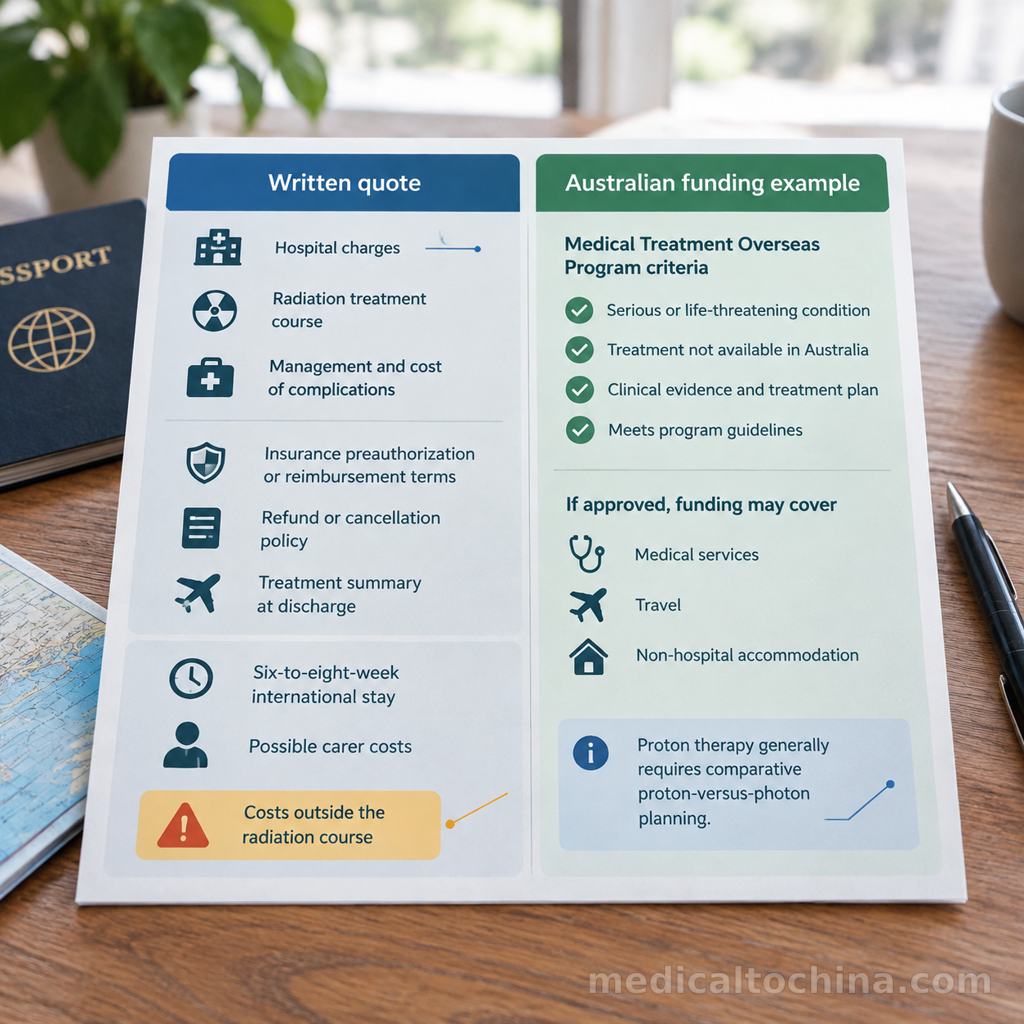
- Insurance preauthorization or reimbursement terms.
- Refund or cancellation policies.
- The treatment summary, radiation dose records, imaging files, and follow-up instructions that will be provided at discharge.
- The name of the hospital contact responsible for communicating with the patient’s home-country medical team.
The written quotation should list hospital charges separately from travel and living expenses and should state whether the quote assumes an uncomplicated treatment course. If a patient must remain abroad for six to eight weeks because of international treatment, expenses beyond the radiation therapy itself may be substantial, especially when an accompanying person is needed.
Coverage and Public Funding
Coverage depends heavily on the patient’s country, insurer, diagnosis, treatment indication, and approval process. Australia’s overseas medical treatment program can provide funding support to approved applicants, but applicants must reside in Australia, be eligible for Medicare, have a life-threatening illness, and require potentially curative treatment that is unavailable or cannot be provided in Australia within an appropriate timeframe. [6]
For proton therapy, the program generally requires a comparison of proton and photon treatment plans. The program may cover approved medical services, travel, non-hospital accommodation, travel insurance, and related costs for one accompanying person. [6]
Patients in other countries and regions should ask their insurer:
- Is proton therapy covered for this diagnosis?
- Is prior authorization required?
- Must the patient first obtain an approved opinion recommending photon therapy?
- Is treatment overseas covered?
- Are travel, accommodation, interpretation, and complications covered?
- Is reimbursement based on the full bill or on a local-equivalent rate?
- What happens if the treatment course is extended?
How to Decide: A Checklist of Clinical and Practical Questions
A reliable comparison should begin with the local radiation oncologist and at least one proton therapy center. The comparison should cover clinical indications, dose distribution, expected toxicity, treatment arrangements, total cost, travel burden, and continuity of care.
The following checklist may help organize the decision:
Clinical Indications
- What are the cancer type, stage, and goal of treatment?
- Will radiation be used alone or in combination with surgery, chemotherapy, immunotherapy, or hormone therapy?
- What evidence supports proton therapy for this specific diagnosis?
- Is the potential advantage primarily physical, or has a clinical benefit already been demonstrated?
Treatment Planning
- Which photon treatment technology is being used as the alternative?
- Which organs will receive a lower dose with proton therapy?
- How large is the dose reduction?
- Could this reduction affect a known complication or long-term risk?
- Do the two plans use the same target volumes and treatment goals?
Side Effects and Follow-Up
- Which symptoms may occur during treatment?
- Which late effects require long-term monitoring?
- Will the patient need endocrine, cognitive, nutritional, urinary, bowel, or rehabilitation follow-up?
- Who will manage complications after the patient returns home?
Travel and Logistics
- How many treatments are required?
- Will treatment be given five days per week?
- How long must the patient remain near the treatment center after the final treatment?
- Is an accompanying person needed?
- Which visa should be applied for based on the expected length of stay?
- Can the patient continue taking necessary medications overseas?
- What should be done if the return flight must be postponed?
Financial Coverage
- Which items are included in the hospital quotation?
- Which items are excluded?
- Is the quoted price fixed, or may it change?
- Who will pay for emergency care received outside the hospital?
- If treatment is interrupted, complications occur, or a second course is needed, will insurance cover it?
- Are subsequent scans and blood tests included?
Continuity of Care
Before leaving the overseas treatment center, patients should receive a medical summary, pathology results, imaging files, treatment plan, dose records, medication list, and follow-up arrangements. The oncology team in the patient’s home country should know whom to contact with questions. This is particularly important when radiation therapy must be combined with systemic treatment or surgery. [1][6]
Proton therapy may be a valuable option when it can substantially reduce radiation exposure to vulnerable organs or lower a clinically meaningful risk of toxicity. If conventional photon therapy can achieve comparable tumor coverage and organ protection without the additional cost and travel burden, conventional photon therapy may be the more appropriate choice. The most reliable way to distinguish between these situations is to obtain a written proton and photon treatment plan tailored to the patient’s individual circumstances.
Patients considering treatment overseas can first ask their local radiation oncologist about the clinical rationale, then request a written assessment and itemized quotation from an appropriate proton therapy center. Medical coordination services can help organize medical records, communicate with hospitals, provide translation, prepare visa documents, and arrange travel, but treatment decisions should always be based on the patient’s oncology team’s advice and comparative treatment plans.
References
- Proton Therapy as Effective as Standard Radiation, With Fewer Side Effects… — medicine.washu.edu
- Proton and Photon Radiotherapy: A Clinical Review — pmc.ncbi.nlm.nih.gov
- From a Car Jack to Precision Cancer Care — stanmed.stanford.edu
- Proton Therapy — mayoclinic.org
- Is Proton Therapy Safer Than Traditional Radiation Therapy? — National Cancer Institute — cancer.gov
- Medical Treatment Overseas Program — health.gov.au
- Does Proton Therapy Have Side Effects for Head and Neck Cancer Patients?… — mdanderson.org
- Proton Therapy: Any Long-Term Side Effects? Any Regrets? — connect.mayoclinic.org
- medicaltochina.com Pricing and Services Reference Data — medicaltochina.com